


✔ 100% Authentic Product
👁️ Currently Viewing 1850
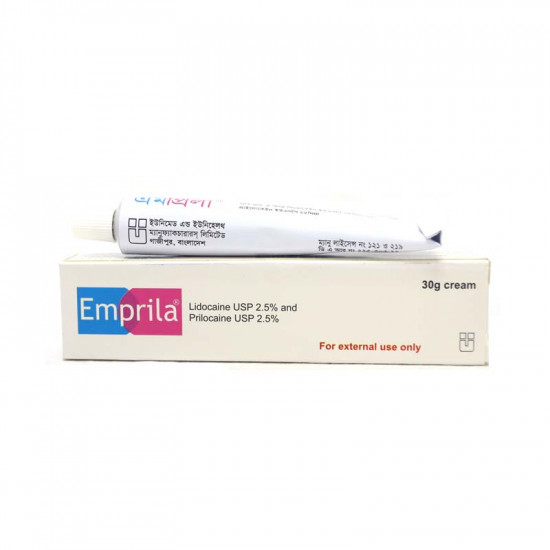
Emprila 2.5%+2.5% Cream, 30g
Lidocaine + Prilocaine
- Local anesthesia for minor dermatological or medical procedures
- Numbing of skin before injections, venipuncture, cannulation, or suturing
- For external use only, as directed by a physician
- Clean and dry the affected area before application
- Apply a thick, even layer (approximately 2–3 mm) without rubbing into the skin
- Cover the treated area with an occlusive dressing
- Keep the dressing in place for at least 1–2 hours before the planned procedure, depending on the indication
- Avoid contact with eyes, mouth, nose, or mucous membranes
- Rinse thoroughly with water in case of accidental exposure
Discount
Price: ৳ 392
MRP:
৳
400
2%
Off

100% Genuine Products, Guaranteed

Safe & Secure Payments, Always

Fast, Secure & Efficient Delivery

Proper Packaging
 Cash on Delivery - All over Bangladesh
 Regular Delivery: 24-48 Hours, Dhaka City* Charge Tk.39-59
- Regular Delivery: 48-96 Hours, Other Cities* Charge Tk.99-125
 ফ্রি ডেলিভারিঃ - ২৯৯৯ টাকা+ অর্ডারে, ঢাকা
শহরে
ফ্রি ডেলিভারিঃ - ২৯৯৯ টাকা+ অর্ডারে, ঢাকা
শহরে- ফ্রি ডেলিভারিঃ - ৫৯৯৯ টাকা+ অর্ডারে, ঢাকার
বাহিরে
📲 মোবাইল অ্যাপ অর্ডারে সাশ্রয় বেশী
-
Google Play Store থেকে ডাউনলোড
-
Apple Store থেকে ডাউনলোড
100% Genuine Products, Guaranteed
Safe & Secure Payments, Always
Fast, Secure & Efficient Delivery
Proper Packaging
- Cash on Delivery - All over Bangladesh
- Regular Delivery: 24-48 Hours, Dhaka City* Charge Tk.39-59
- Regular Delivery: 48-96 Hours, Other Cities* Charge Tk.99-125
- ফ্রি ডেলিভারিঃ - ২৯৯৯ টাকা+ অর্ডারে, ঢাকা
শহরে
- ফ্রি ডেলিভারিঃ - ৫৯৯৯ টাকা+ অর্ডারে, ঢাকার
বাহিরে
- Google Play Store থেকে ডাউনলোড
- Apple Store থেকে ডাউনলোড
📲 মোবাইল অ্যাপ অর্ডারে সাশ্রয় বেশী
✅ Description:
Emprila is a combination of lidocaine (lignocaine) and prilocaine, both amide-type local anesthetics. These agents stabilize neuronal membranes by inhibiting ionic movement required for nerve impulse initiation and conduction, thereby blocking pain signal transmission from the skin to the brain.
- Apply only on healthy, intact skin
- Always cover with an occlusive dressing unless advised otherwise
- Wash hands thoroughly before and after application
- Do not exceed the recommended dose or duration
- Avoid driving or operating machinery if systemic symptoms occur

Relevant Products / প্রাসঙ্গিক পণ্য

✔️ Description:
Emprila 5 g Cream is a topical preparation containing two local anesthetics that temporarily numb the skin. It is applied to intact, unbroken skin to reduce pain before minor medical procedures such as needle insertion, wound suturing, or minor dermatological interventions. The cream works by temporarily blocking nerve signals in the applied area, resulting in reduced pain sensation.
✔️ Dosage
Adult Dosage
Minor Dermatological Procedures (e.g., IV cannulation, venipuncture)
Apply 2.5 g over 20–25 cm² of intact skin
Leave in place for at least 1 hour
Painful Dermatological Procedures (large areas)
Apply 2 g per 10 cm²
Leave on for at least 2 hours
Maximum analgesia occurs within 2–3 hours and may last 1–2 hours after removal
Genital Use
Male genital skin: Apply 1 g per 10 cm² for 15 minutes under occlusion
Female external genital skin: Apply 5–10 g for 5–10 minutes (occlusive dressing optional)
Pediatric Dosage
Neonates (<37 weeks gestation): Use not recommended
0–3 months (<5 kg): Maximum 1 g; area ≤10 cm²; ≤1 hour
3–12 months (>5 kg): Maximum 2 g; area ≤20 cm²; ≤4 hours
1–6 years (>10 kg): Maximum 10 g; area ≤100 cm²; ≤4 hours
7–12 years (>20 kg): Maximum 20 g; area ≤200 cm²; ≤4 hours
✔️ Side Effects:
Side Effects
Very Common (>10%)
Skin blanching or pallor
Application site redness, pain, or burning sensation
Common (1–10%)
Altered temperature sensation
Application site swelling
Itching
Rare (<1%)
Rash
Methemoglobinemia
Seizures
Cardiac effects
Allergic reactions (urticaria, angioedema, bronchospasm, anaphylaxis)
✔️ Interaction
Increased risk of toxicity when used with medications that induce methaemoglobinemia
Additive cardiac effects may occur when used with Class I or Class III antiarrhythmics
✔️ Contraindications (ব্যবহার নিষেধ):
- Preterm neonates (<37 weeks of gestation)
- Infants under 12 months receiving methaemoglobin-inducing drugs
- Patients with congenital or idiopathic methaemoglobinemia
- Application on broken, inflamed, or infected skin
- Use on mucous membranes unless specifically directed
✔️ Precautions & Warnings
- Use with caution when applying to large skin areas or leaving on for more than 2 hours
- Caution in patients with severe hepatic impairment
- Use carefully in patients taking Class I or Class III antiarrhythmic drugs
- Dose adjustment may be required in elderly, debilitated, or acutely ill patients
- Avoid use near the eyes or on open wounds
- Use during pregnancy and breastfeeding only if clearly necessary
✔️ Storage:
• Store in a cool and dry place away from sunlight.
⚠️Disclaimer:
At ePharma, we’re committed to providing accurate and accessible health information. However, all content is intended for informational purposes only and should not replace medical advice from a qualified physician. Please consult your healthcare provider for personalized guidance. We aim to support, not substitute, the doctor-patient relationship.
📦Pricing Information, Availability:
Product Availability & Pricing Notice
Please note that pricing, availability, and service offerings are subject to change due to: Market fluctuations, Manufacturer or supplier adjustments, Product discontinuation or temporary unavailability, Advertising errors. All orders depend on stock availability and staff resources. If services are provided on a time-and-materials basis, any shared estimates are for planning purposes only.

Reliable
All products displayed on ePharma are procured from govt. approved pharmaceuticals and verified licensed pharmacies from 2016.

Secure
ePharma uses Secure Sockets Layer (SSL) 128-bit 🔒 encryption and is Payment Card Industry DataSecurity Standard (PCI DSS) compliant.

Affordable
Find affordable medicine substitutes, save up to 50% on health products, up to 30% off on doctor consultations.

Social
Providing health care services under the health and beauty category with more than 170K Facebook audience and 10M+ reach.







Get more features!
Download the app now
🇬✓ Doctor consultation ✓ 24/7 helpline